
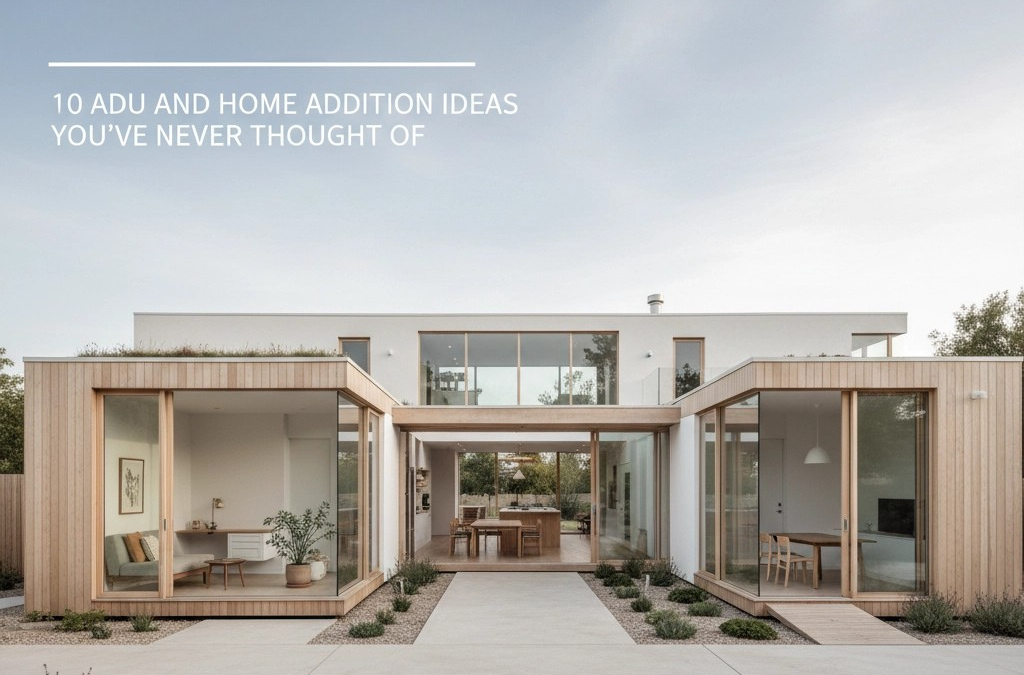
Multigenerational living is quietly revolutionizing how we think about home design. Whether you’re planning for aging parents, adult children returning home, or simply creating flexible spaces for an unpredictable future, the right home addition or ADU can transform your property into a harmonious haven for multiple generations.
But here’s the thing: most people default to basic basement conversions or simple garage apartments. We’re diving deeper into generational living spaces that actually work for real families, with ideas that go way beyond the obvious.
1. The Flexible Bedroom Strategy
Instead of building one large living space, consider adding multiple smaller bedrooms to your home renovation plan. This might sound counterintuitive, but bedrooms are your most cost-effective square footage since they don’t require expensive plumbing or kitchen fixtures.
A two or three-bedroom ADU can adapt as your family changes: nursery to guest room to home office to craft room. The flexibility is incredible, and you’re not locked into one specific use case for decades.
Pro tip: Design these bedrooms with neutral finishes and good natural light so they can easily transform as needs evolve.

Image : Modern ADU interior with flexible bedroom spaces and clean, adaptable design
2. Shared Outdoor Connection Zones
Most ADU designs focus entirely on indoor living, but the magic happens when you create intentional outdoor gathering spaces that connect the main house and addition. Think beyond a simple deck: we’re talking about courtyards, fire pit areas, or even shared garden spaces that become the natural meeting point for different generations.
These outdoor zones encourage interaction without forcing it. Grandparents can garden while kids play nearby, or everyone can gather for evening conversations without feeling cramped indoors.
3. AI-Powered Smart Living Systems
Here’s where interior design meets cutting-edge technology. Today’s smart home systems go far beyond basic automation: they can learn patterns and adapt to different family members’ preferences automatically.
Imagine an ADU that recognizes when elderly parents wake up and gradually increases lighting, or systems that automatically adjust temperature and ambiance based on who’s using the space. Voice-controlled everything becomes especially valuable for family members with mobility challenges.
The key is choosing systems that multiple generations can actually use: simple voice commands work better than complex app interfaces.
4. Energy Independence Through Sustainable Design
Modern ADU builders are incorporating solar panels, heat pump systems, and even rainwater harvesting into their designs. But here’s the twist: these sustainable features can make your generational living space essentially self-sufficient.
Think about it: reduced utility bills benefit everyone, and energy independence becomes crucial if elderly family members live on fixed incomes. Plus, younger generations increasingly prioritize environmental responsibility.
Green roofs, smart energy management, and high-performance insulation create comfortable living while keeping costs manageable long-term.

Image : Sustainable ADU with solar panels and modern eco-friendly design elements
5. Split-Bedroom Floor Plans with Central Gathering
Instead of traditional layouts, design your home addition with bedrooms on opposite ends and shared living space in the center. This creates natural privacy while maintaining family connection.
The central area becomes the heart of the space: open kitchen, comfortable seating, and dining area where different generations naturally intersect. Bedrooms feel separate enough for privacy but close enough to maintain that important family bond.
This layout works especially well for young adult children who need independence but still benefit from family proximity.
6. Transformative Furniture Systems
Forget bulky furniture that serves only one purpose. Modern motorized and modular furniture systems can completely change how a room functions throughout the day.
Murphy beds that fold into walls reveal workout space or home offices. Expandable dining tables accommodate family dinners or convert to craft workstations. Motorized room dividers create instant privacy or open up for larger gatherings.
These systems maximize your square footage investment while giving each family member the space they need for their specific activities.
7. Building Up Instead of Out
When yard space is precious, consider home renovations that add a second story to existing structures. An upper-floor ADU maximizes your lot’s potential while creating a distinctly separate living environment.
This approach works brilliantly on narrow urban lots or properties where you want to preserve outdoor space for gardens or recreation. Plus, upper-floor units often have better natural light and views.
Access becomes crucial: external staircases provide independence while internal connections offer convenience during bad weather or for family members with mobility concerns.

Image : Two-story home addition with external staircase and modern architectural details
8. Above-Garage ADU with Private Entry
Your existing garage represents untapped potential for generational living spaces. Building an ADU above garage space creates a self-contained unit while preserving ground-level parking and storage.
The key is designing proper access: external staircases provide privacy and independence that family members crave. Many above-garage ADUs also incorporate rooftop deck space, creating outdoor living that feels completely separate from the main house.
This option works especially well for adult children who need affordable housing while saving for their own homes, or for elderly parents who want to stay close but maintain independence.
9. Activity-Specific Zone Design
Rather than creating generic open space, design distinct zones for specific activities within your ADU. A dedicated workspace area, reading nook, crafting zone, or exercise corner gives each family member their own claimed territory.
These zones can be defined through furniture placement, lighting changes, or partial dividers: you don’t need full walls to create psychological separation. The result feels more organized and livable than one large room trying to serve every purpose.
Pro tip: Include built-in storage specific to each zone’s activities to keep the space functional and clutter-free.
10. Health-Focused Material Selection
This goes beyond basic eco-friendly choices. Select materials specifically for indoor air quality and long-term health: low-VOC paints, bamboo or cork flooring, reclaimed wood features, and high-performance windows.
These choices become especially important in smaller living spaces where air quality impacts comfort and health. Plus, many sustainable materials like bamboo and cork offer natural antimicrobial properties and better durability than traditional options.
Consider the long-term maintenance needs too: materials that age gracefully and resist wear save money and effort over decades of use.

Image : Interior space with natural materials like bamboo flooring and reclaimed wood accents
Making Your Vision Reality
The best generational living spaces balance independence with connection, privacy with community, and current needs with future flexibility. Whether you’re working with an experienced ADU builder or planning a major home addition, start by honestly assessing how your family actually lives and what you need most.
Remember: the most successful multigenerational living situations happen when everyone has space to retreat and recharge, but family connection remains natural and easy.
Want to explore your specific situation? Check out our portfolio of completed projects to see how other families have solved their generational living challenges.
These ideas work because they’re designed around real family dynamics, not just architectural trends. The key is choosing the approaches that fit your specific family’s needs, budget, and long-term goals.
Your multigenerational living space should enhance family relationships, not strain them: and the right design makes all the difference.